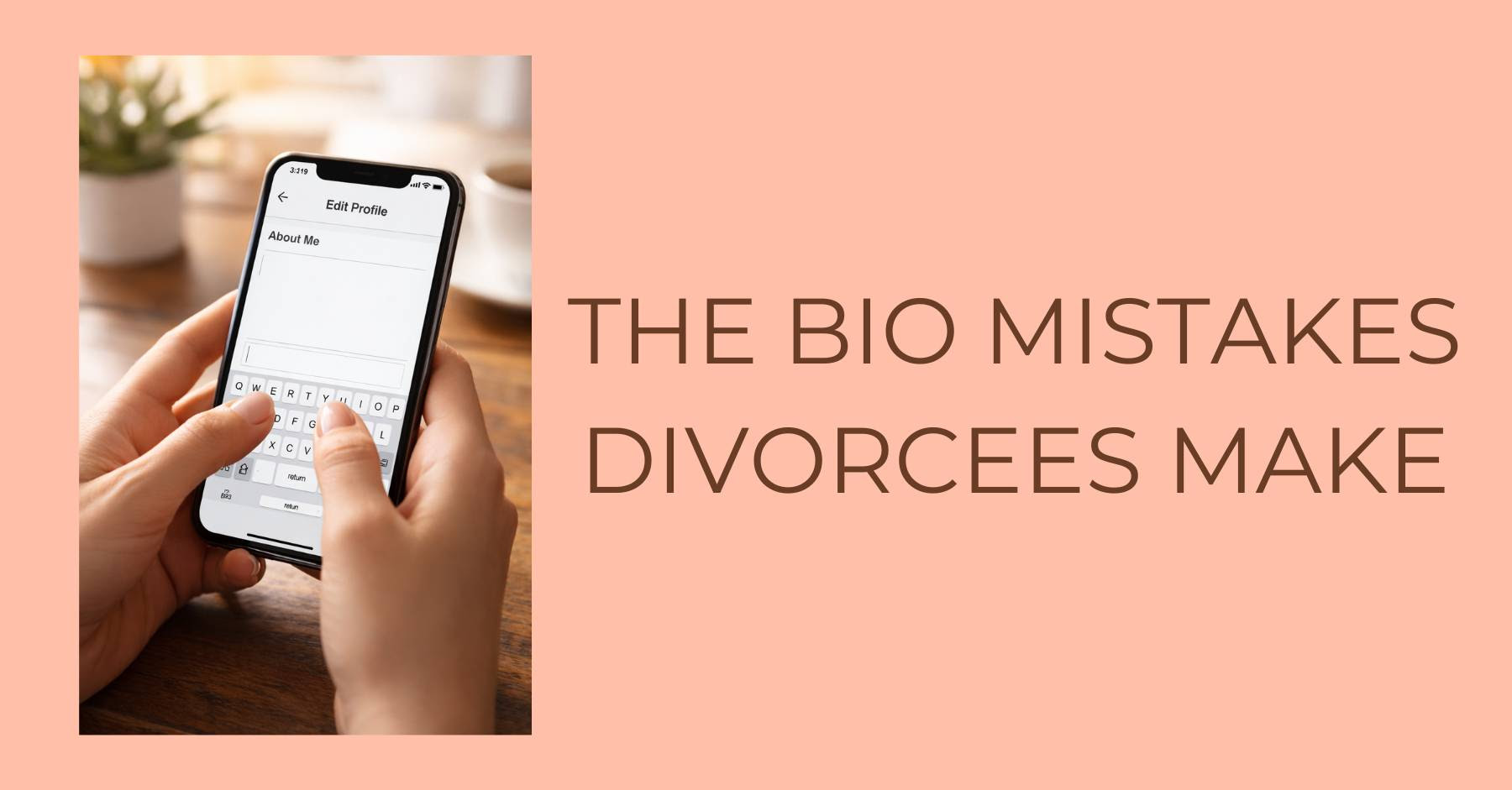
If you’re dating after divorce (or after a long relationship or dating hiatus) and feel like writing a dating profile is strangely hard — you should absolutely cut yourself some slack!
Most of us, of a certain age, didn’t grow up with online dating. We met people through friends, work, school, or sheer coincidence. Suddenly being asked to summarize yourself in a few prompts and photos can feel unnatural, vulnerable, and honestly a little awkward.
Nobody gets their profile perfect the first time. Online dating is a skill. It takes practice, trial and error, and a few adjustments along the way.
The good news? The mistakes I see most often are incredibly fixable. Small shifts in how you write your bio can dramatically change the quality of people you attract.
Let’s walk through the biggest ones — and exactly how to fix them.
1. Being Too Generic
Many people try to play it safe. They don’t want to sound “too much,” so their bio ends up sounding like… everyone else.
Generic profiles don’t repel people — but they don’t attract anyone either. And attraction online starts with specificity.
Before:
“I love to laugh, travel, and spend time with friends and family.”
After:
“Sunday mornings usually find me walking along the river with coffee in hand, planning my next trip — currently debating between Portugal or another attempt at learning to ski.”
Why this works: Specifics create imagery. Imagery creates connection. Someone can now picture a life with you — and respond to something real.
2. Not Giving People Enough to Go On
A super common post-divorce instinct is self-protection: keeping things brief, neutral, or vague. But when your profile lacks detail, people don’t know how to start a conversation.
Your bio’s job is not to impress — it’s to invite interaction.
Before:
“I enjoy staying active and trying new things.”
After:
“Recently traded weekend brunches for pickleball lessons — still wildly uncoordinated but having fun trying.”
Why this works: Now someone has an easy opening message. You’ve given them something human and approachable to respond to.
3. Being Negative (Even a Little)
This one is totally understandable! So many people arrive on the apps feeling tired, skeptical, or burned out.
But bios that mention what you don’t want — or frustration with dating — unintentionally signal emotional heaviness to strangers who don’t know your story yet.
Even subtle negativity changes how people perceive you.
Before:
“No games. No drama. If you’re not serious, don’t bother.”
—or—
“Never thought I’d be back on these apps, but here we are.”
After:
“I value kindness, honesty, and people who show up as themselves and I do the same— life feels a lot easier that way.”
Why this works: The message is the same, but the tone feels warm and emotionally available instead of guarded.
(And yes — absolutely never mention your ex in your bio.)
4. Turning Your Bio Into a Wishlist
This is probably the most common mistake I see.
After a long marriage or relationship, you often have clarity about what you want — which is wonderful. But your profile is not a job description for your future partner.
People connect to who you are, not a list of requirements.
Before:
“Looking for someone confident, successful, emotionally intelligent, funny, adventurous, and ready for a relationship.”
After:
“I’m happiest hosting friends for dinner, exploring a new neighborhood, or planning my next adventure — ideally with someone who enjoys good conversation and a little adventure :)”
Why this works: You’re showing your lifestyle and values instead of screening candidates. The right people will naturally recognize themselves in it.
The Bigger Picture
Your dating bio isn’t a résumé. It’s not a defense mechanism. And it’s not a filtering system.
It’s an introduction.
The goal isn’t to attract everyone — it’s to help the right person feel like they already have a small window into your world.
And if this still feels uncomfortable, that’s normal. Dating in midlife is as much about rediscovering yourself as it is about meeting someone new. Often, writing your profile is the first step in remembering who you are now — not who you were before.
Give yourself permission to adjust, refine, and evolve it over time. The people who find meaningful relationships online aren’t the ones who get it perfect immediately — they’re the ones willing to learn as they go.
And you absolutely can learn this.
Happy Dating,
Alyssa